Castiny BetaYou're exploring an early version. Your feedback shapes the platform.
Back to the hub



EnglishNews
Google Can Buy $12.2 Billion of Marvell Stock. The Bigger Story Is Its AI Chip War
Google has struck a major custom-chip agreement with Marvell and given itself the right to buy almost 59 million Marvell shares
8 views·August 19, 2026· 12 min read
Google has struck a major custom-chip agreement with Marvell and given itself the right to buy almost 59 million Marvell shares, a stake worth about $12.18 billion if fully exercised. That headline alone is enormous, but it is easy to misunderstand what happened. Google did not simply hand Marvell $12 billion today. The deal ties Google's potential ownership of Marvell to how much hardware it buys through 2033, which tells us something far more interesting: Google expects its appetite for custom AI silicon to remain enormous for years.
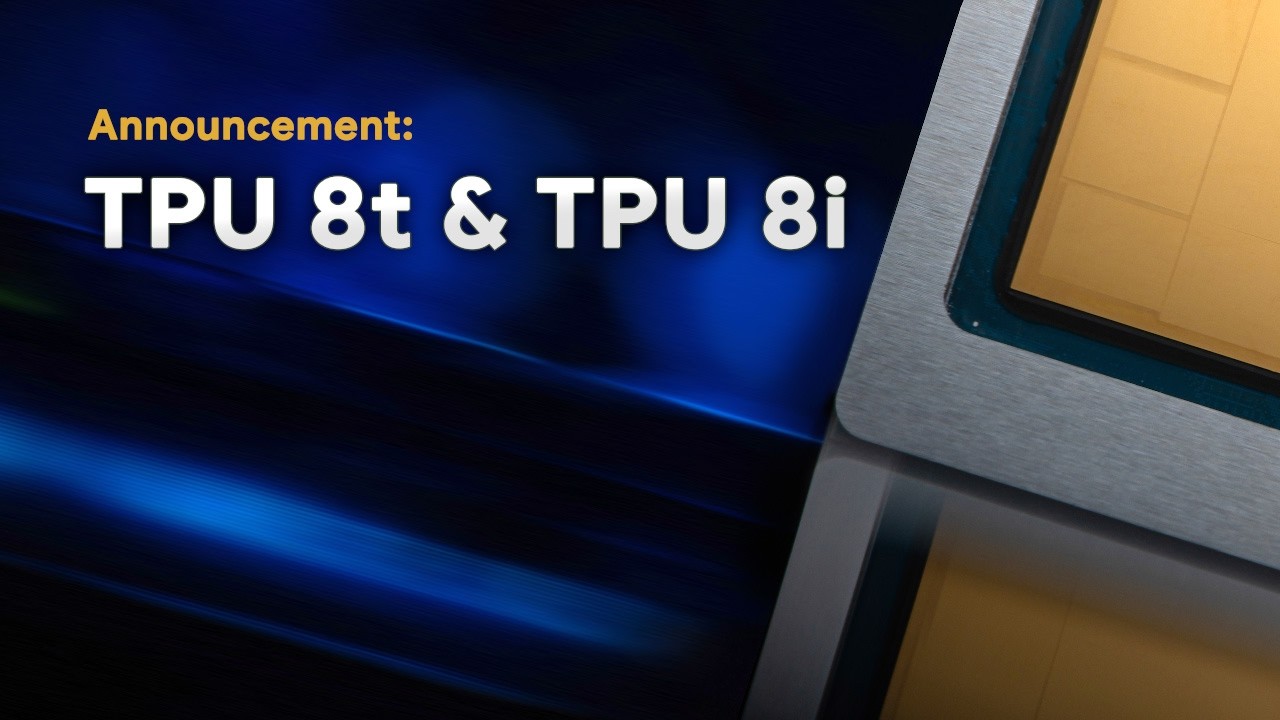
Google's TPU 8t and TPU 8i. Google is increasingly building AI infrastructure around chips designed specifically for its own workloads. Image: Google Cloud.
The agreement announced today gives Google a warrant to purchase up to 58.97 million Marvell shares at $206.58 each. If every part of that warrant eventually becomes available and Google exercises it, Reuters calculates the position would be worth roughly $12.18 billion and could make Google one of Marvell's largest shareholders. Most of those shares do not simply unlock with time. They depend on Google hitting agreed purchasing targets through Marvell's fiscal 2033, meaning the bigger Google's future orders become, the more of Marvell Google can potentially own.
That structure is what makes this deal interesting to me. Google is effectively telling Marvell: if you become important enough to our AI infrastructure, we want a financial stake in the company helping us build it.
Investors immediately understood the significance. Marvell shares jumped more than 11% in premarket trading after the announcement, while Broadcom, Google's most important existing custom-chip partner, fell more than 3% at that point. The market reaction does not mean Google is dumping Broadcom. Broadcom signed its own long-term deal with Google earlier this year covering future generations of custom AI chips and components through 2031. What Google appears to be doing is much smarter than switching suppliers. It is building competition inside its own supply chain.
Google is not buying one chip
The phrase "AI chip deal" makes this sound much narrower than it is. Marvell says its work for Google will include AI inference accelerators, storage controllers, networking technology, memory-interface controllers and near-memory computing. In other words, Google is not asking Marvell to design one mysterious processor and disappear. The partnership reaches into several pieces of the infrastructure surrounding Google's TPU ecosystem.
That matters because modern AI systems are becoming less about owning one extremely fast processor and more about making thousands of processors, memory systems and networking components behave like one machine. Training a model is expensive, but running that model millions or billions of times for actual users creates another problem entirely. Every response from an AI assistant consumes compute, memory bandwidth, networking capacity and electricity.
Google has spent years trying to solve that economics problem with its Tensor Processing Units, or TPUs. Instead of relying entirely on general-purpose GPUs, Google designs accelerators around the specific workloads it needs for products such as Gemini and Google Cloud. Reuters says demand for custom chips like Google's TPUs is accelerating partly because companies are looking for alternatives to expensive Nvidia GPUs and hardware that can be optimized more precisely for inference.
The latest TPU generation makes that strategy much easier to see. Google split its eighth-generation family into two specialized systems. TPU 8t is focused heavily on large-scale training, while TPU 8i is optimized for inference, serving and reasoning workloads. Google says TPU 8t can deliver up to 2.7 times better training performance per dollar than the previous Ironwood generation, while TPU 8i offers up to an 80% improvement in inference performance per dollar. Both can reach roughly twice the performance per watt of Ironwood.
Google's official introduction to its eighth-generation TPUs.
Those efficiency numbers explain why Google cares so much about owning more of the hardware stack. Saving a few percent on one computer is not very exciting. Saving a few percent when you are deploying enormous AI clusters and serving models to hundreds of millions of people becomes real money very quickly.
This is why I think describing the AI chip race as Nvidia versus everyone else is becoming too simple. Nvidia still dominates accelerated computing, but Google is not waiting around for somebody else to decide what the ideal Gemini chip should look like. It can design hardware around its own models, its own data centres and its own software stack.
The Marvell deal gives it another company capable of helping turn those designs into functioning infrastructure.
Marvell has quietly put itself in the middle of everybody's AI spending
Marvell's custom compute business is increasingly focused on AI accelerators, memory and high-speed data movement. Image: Marvell.
The part of this story I find most interesting is Marvell itself. Five years ago, the average person following AI probably would not have put Marvell beside Nvidia, Google and Broadcom in a conversation about the future of AI compute.
The company has spent years making sure that changes.
Marvell says it now has custom products in production for all four major US hyperscalers. Its relationship with Amazon Web Services already includes a five-year, multi-generation agreement covering custom AI accelerators, optical components, Ethernet switching and other data-centre hardware. Marvell has also spent heavily on technologies such as advanced packaging, high-bandwidth memory interfaces, silicon photonics and custom compute.
Its financial results show how quickly that strategy is paying off. Marvell reported a record $8.195 billion in fiscal 2026 revenue, up 42% year over year, and said AI demand was a major driver. Its next quarter set another record at $2.418 billion, up 28%, while management described AI-related bookings as exceptional and raised its outlook for fiscal 2027 and fiscal 2028. Marvell expects second-quarter fiscal 2027 revenue around $2.7 billion at the midpoint.
For perspective, the maximum value of Google's $12.18 billion warrant is roughly one and a half times Marvell's entire fiscal 2026 revenue. That is not a perfect financial comparison because a warrant and annual revenue are completely different things, but it shows the scale of the relationship Google is potentially creating.
Marvell itself estimates that its addressable data-centre market could reach $94 billion by 2028, driven heavily by accelerated custom compute, interconnects, switching and storage. The company is betting that hyperscalers will increasingly stop buying identical infrastructure and start designing hardware around their own AI workloads.
I think that bet looks increasingly sensible.
The strange part is that Nvidia has already invested $2 billion in Marvell
This is where the AI chip industry starts becoming wonderfully complicated.
In March, Nvidia invested $2 billion in Marvell as part of a strategic partnership built around Nvidia's NVLink Fusion ecosystem. Under that partnership, Marvell can provide custom XPUs and networking technology that connect into Nvidia's broader AI infrastructure. Nvidia CEO Jensen Huang said the arrangement was aimed at helping customers build specialized AI compute while remaining connected to Nvidia's ecosystem.
Now Google is tying potentially billions of dollars in Marvell ownership to purchases of technology intended partly to strengthen Google's own custom TPU ecosystem.
So is Marvell helping Nvidia or helping Google compete with Nvidia?
Both.
That is exactly why I think Marvell is becoming one of the more interesting companies in the AI hardware boom.
Marvell does not necessarily need one AI architecture to win. It can provide custom silicon and connectivity to several competing ecosystems. Image: Marvell.
Marvell does not have to convince the entire world that one Marvell-branded accelerator should replace Nvidia GPUs. It can sell the technology required to build several different AI systems. Google wants custom TPUs. Nvidia wants companies building semi-custom infrastructure around NVLink. Amazon wants its own cloud silicon. Other hyperscalers want variations of the same idea.
Marvell can work inside all of those worlds.
That is a much safer position than betting everything on one processor winning the AI race.
The company has also been buying technology that makes this strategy harder to copy. In February it completed the acquisition of Celestial AI, whose Photonic Fabric technology is designed to move enormous amounts of data between AI accelerators using optical connections. Marvell expects Celestial AI to eventually contribute a $500 million annualized revenue run rate, potentially doubling to $1 billion as the technology ramps.
Eight days later, Marvell completed its acquisition of XConn Technologies, adding PCIe and CXL switching technology that helps processors, memory and accelerators communicate inside increasingly complicated AI systems. Marvell expects XConn to contribute around $100 million in fiscal 2028 revenue.
These acquisitions sound far less exciting than saying "new AI chip," but they address one of the industry's biggest problems: moving data around is becoming nearly as important as processing it.
If an expensive accelerator spends half its time waiting for memory or another chip, buying more accelerators does not solve the problem particularly well.
Google is creating competition for Broadcom without walking away from it
The Broadcom part of today's announcement should not be ignored. Google and Broadcom have worked together on custom silicon for years, and the relationship is not ending. Their latest agreement runs through 2031 and covers future generations of custom AI chips and components for Google's next-generation AI racks.
I would read Marvell's arrival as diversification rather than divorce.
That may be strategically more important.
If Google relies too heavily on one external design partner, that supplier gains enormous leverage. If Google can split programs between Broadcom, Marvell and its own internal engineering teams, it gains more pricing pressure, more manufacturing flexibility and a second route if one project misses its targets.
It also creates competition for ideas.
Maybe Broadcom produces the better solution for one TPU generation. Maybe Marvell wins another inference accelerator. Maybe one company gets networking while another handles a memory controller. Google can choose according to performance, price and schedule rather than tying the future of Gemini infrastructure to one semiconductor company.
Broadcom's shares falling more than 3% in premarket trading after today's announcement suggests investors immediately recognized that possibility. Marvell's jump of more than 11% reflected the opposite side of the same calculation.
The more interesting question is whether other cloud companies follow the same playbook.
AI spending has reached the point where custom hardware almost becomes inevitable
Big Tech companies are expected to spend more than $700 billion on AI infrastructure this year, according to figures cited by Reuters, up sharply from roughly $400 billion last year. That amount of capital changes the economics of custom silicon.
If a company spends $100 million on compute, creating its own processor may not make sense. If it expects to spend tens of billions every year, even relatively small improvements in power efficiency or inference cost can justify enormous engineering programs.
That is Google's advantage.
It knows what Gemini will be asked to do. It knows how Google Search uses AI. It knows what Cloud customers are running. It controls TensorFlow, JAX, much of the surrounding software, its data centres and the TPU architecture itself.
A generic processor has to be good at serving many different customers. Google can build something specifically good at being Google.
That does not mean Nvidia suddenly becomes irrelevant. Nvidia's advantage is much larger than the GPU alone. CUDA, networking, software libraries, developer familiarity and an enormous hardware ecosystem make Nvidia difficult to replace. The fact that Marvell itself accepted a $2 billion Nvidia investment only a few months ago shows how deeply Nvidia remains embedded in AI infrastructure.
What is changing is that Nvidia is no longer the only possible architecture around which a huge AI system can be built.
Google clearly wants its TPU stack to become another one.
The $12.2 billion headline is almost a distraction
Marvell discussing why hyperscalers are increasingly moving toward custom silicon.
If Google eventually exercises every share covered by the warrant, the investment would be enormous. But focusing only on the $12.18 billion number misses how the agreement is designed.
Google earns access to most of those shares by buying more Marvell technology.
That means the really important number is not how many shares Google might own in 2033. It is how much silicon Google expects to need between now and then.
This is happening while Marvell is already producing record revenue, Nvidia has put $2 billion into the company, Marvell is working with all four major US hyperscalers, and the company is buying optical and switching technology specifically for larger AI clusters. At the same time, Google is building increasingly specialized generations of TPUs rather than moving back toward general-purpose hardware.
That combination makes today's announcement feel less like an isolated deal and more like another sign of where the AI industry is going.
The first phase of the AI hardware boom was largely about getting enough GPUs.
The next phase looks more complicated. Companies are asking which workloads need GPUs, which deserve custom accelerators, how those processors communicate, where memory sits, how much electricity every token costs and how much control they are willing to give an outside supplier.
Google wants more control.
Marvell wants to be the company that helps everybody build whatever answer they choose.
And Nvidia, interestingly, has already bought into Marvell too.
That is why today's $12.2 billion headline matters. The AI chip war is no longer just about who builds the fastest processor. It is becoming a fight over who gets to design the entire machine.
0 Comments
to comment
No comments yet. Be the first to share your thoughts!