Castiny BetaYou're exploring an early version. Your feedback shapes the platform.
Back to the hub


EnglishInsights
Mistfall Hunter’s Million-Player Launch Was the Easy Part. The Real Test Is Retention
Mistfall Hunter attracted more than one million players within a week of launch and pushed past 44,000 simultaneous players on Steam
8 views·August 19, 2026· 16 min read
Mistfall Hunter attracted more than one million players within a week of launch and pushed past 44,000 simultaneous players on Steam. Three weeks later, around 15,000 people are playing at the time of writing, its 24-hour peak is still above 21,000, but its Steam reviews remain Mixed and the game has fallen to #77 on Steam's global revenue chart. Those numbers do not tell me Mistfall Hunter is dying. They tell me Bellring Games has reached the much harder stage: proving that a very good idea can become a game people still want to play six months from now.
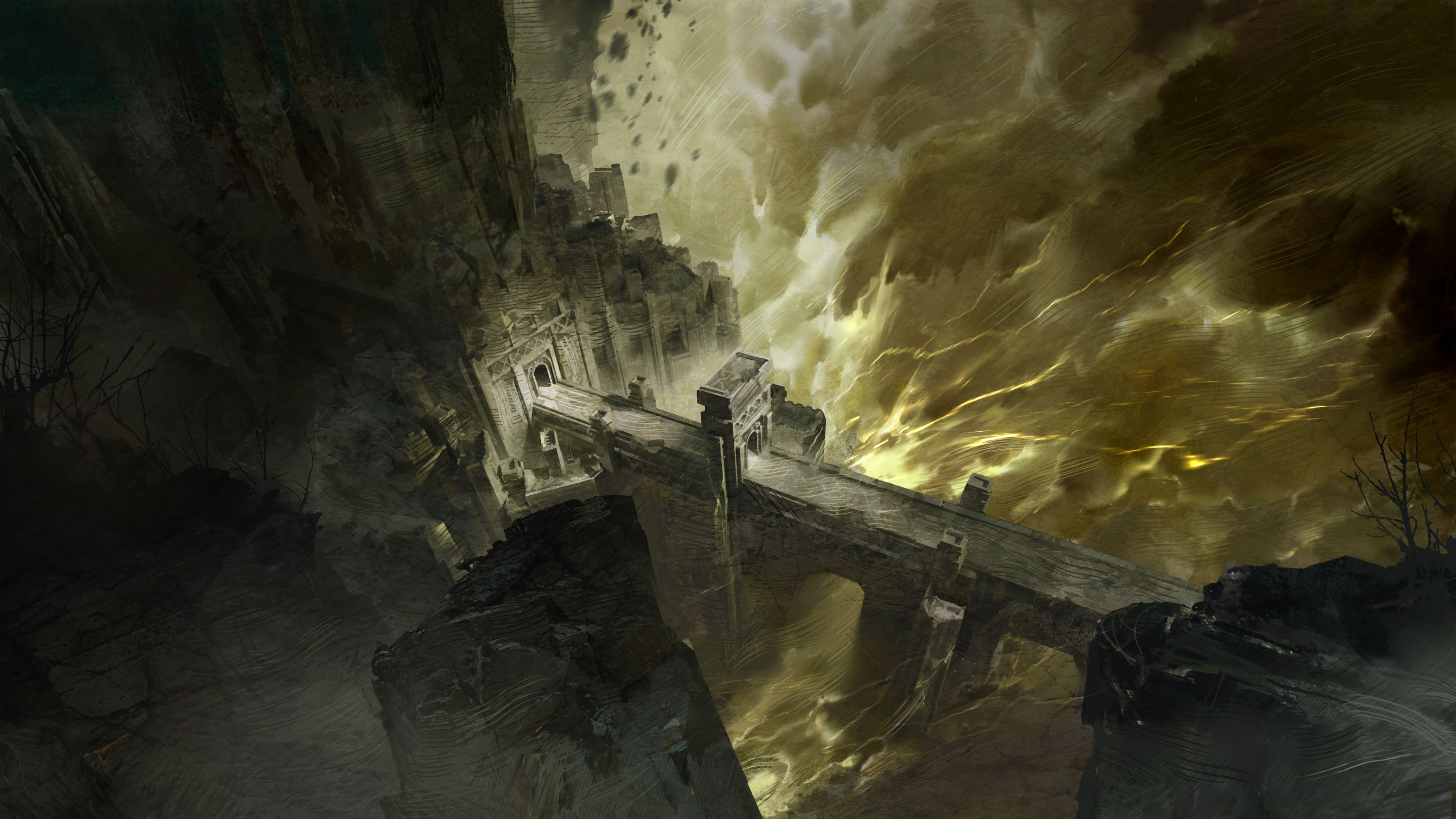
The Gyldenmist is more than background lore. Bellring designed it to physically pressure players deeper into the extraction loop. Image: Bellring Games.
Mistfall Hunter launched on July 29 with one of the easier elevator pitches of 2026: take the tension and permanent-loss structure of an extraction game, replace assault rifles with swords, shields, bows and magic, then build the combat closer to an action RPG. Within days, Bellring Games said more than one million Gyldhunters had entered Weavereach. Steam concurrency climbed to 44,472 on August 2, while the game also benefited from availability through Xbox Game Pass.
The important word in Bellring's announcement is players, not copies sold. SteamDB's third-party ownership estimates currently range from roughly 426,000 to 555,000 Steam owners, and those estimates are not official sales figures. The wider one-million figure includes the game's broader audience across platforms and services, so it should not be reported as "one million copies sold."
What interests me more is what happened after the launch rush. SteamDB now shows approximately 15,000 players online, a 24-hour peak of 21,933, and the original 44,472 all-time peak. In other words, the game is no longer living off launch-day curiosity, but it has not collapsed either. A daily peak around half of its launch maximum several weeks after release is still a meaningful audience for a new multiplayer IP. The problem is that the commercial momentum has cooled much faster: Mistfall Hunter currently sits around #77 on SteamDB's live global top-seller ranking.
That gap between a respectable active audience and fading sales is where the real Mistfall Hunter story begins.
This game started because its director thought two genres belonged together
Mistfall Hunter is the debut game from Bellring Games, but it did not come from a team unfamiliar with action games. Game director Haoliang "Hao" Zhang said in a 2025 interview that he had spent more than 12 years working in the games industry. When asked where Mistfall Hunter came from, Zhang pointed to his own history playing games such as Monster Hunter, Devil May Cry and God of War, combined with his team's interest in extraction games. Bellring's central idea was that the risk-and-reward structure of extraction could work particularly well when the fights happened at close range instead of through scopes.
That sounds obvious now that Mistfall Hunter exists, but it was a good observation. Traditional extraction shooters create tension through information. You hear a gunshot in another building, wonder what weapon produced it, decide whether the person firing is worth hunting, and constantly calculate how much of your inventory you are willing to risk.
Melee action games create tension differently. You usually have to physically commit.
You cannot kill somebody from 150 metres away and immediately disappear. In Mistfall Hunter, closing distance exposes you to their abilities, dodges, crowd control, teammates and counterattacks. If they are carrying valuable equipment, both players know exactly what is at stake. Bellring did not just change the weapons in an extraction shooter. It changed the intimacy of losing.
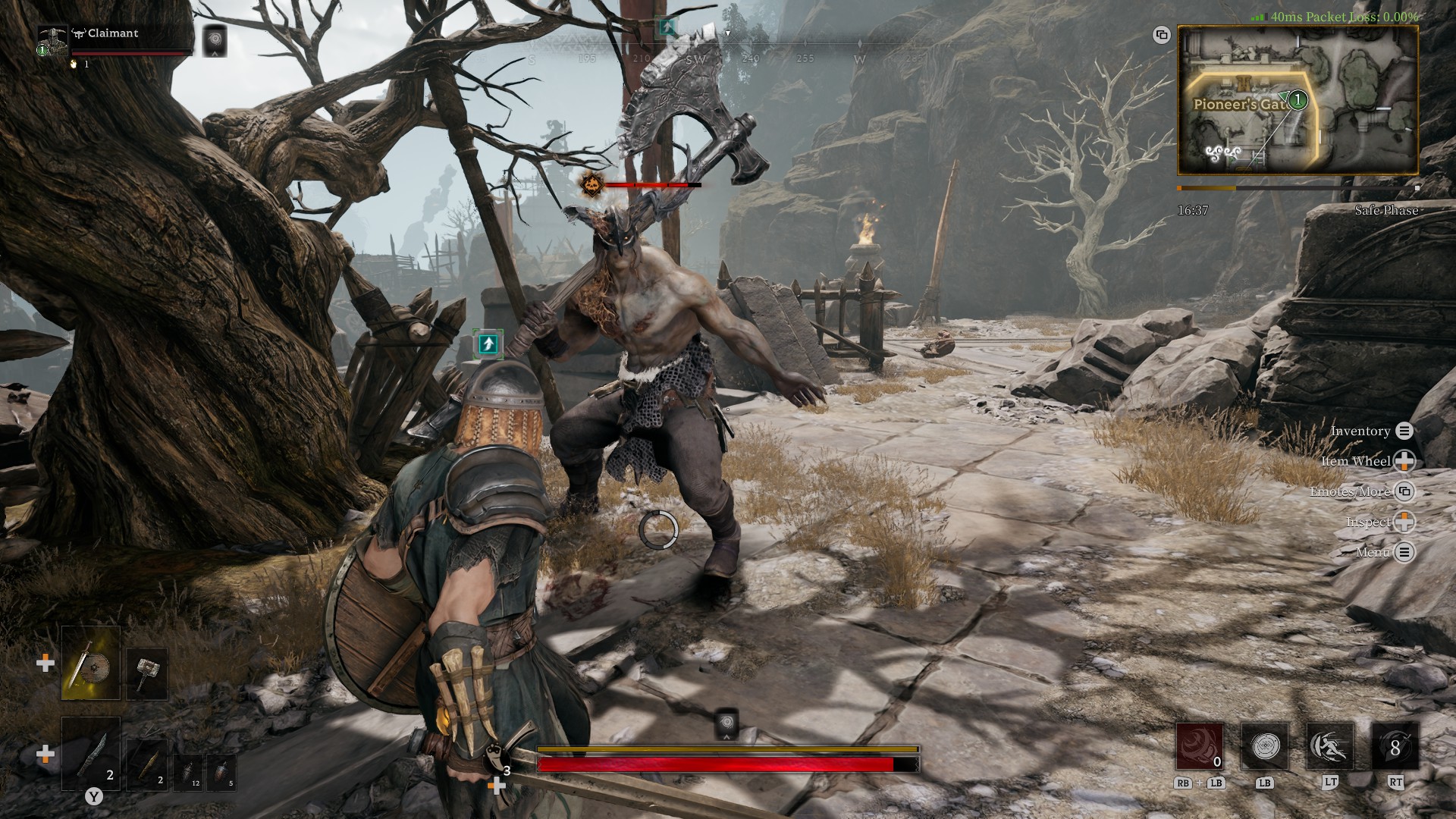
Mistfall Hunter removes traditional lock-on and asks players to aim melee attacks manually. Image: Bellring Games via PC Gamer.
PC Gamer's time with the Steam Next Fest build made an important distinction here. The combat looked like a Soulslike from a distance, but in practice it felt closer to modern God of War in some of its movement and attack flow. GamesRadar found the same hybrid appealing during Next Fest, calling out how naturally the slower fantasy fighting fit the extraction structure even when the hitboxes and animations lacked FromSoftware's refinement.
That lack of refinement matters more in this game than it would in an ordinary RPG. If a boss kills me because an animation behaves strangely, I lose a few minutes. If another player kills me because of desync, a questionable hitbox or an attack that looked like it missed, I can lose equipment I spent several successful runs building.
That is one of Mistfall Hunter's biggest design contradictions. The extraction system makes every fight more exciting, but it also makes every technical problem more expensive.
Bellring did not build the current game in one shot
The first major public reveal came during the Xbox Partner Preview on October 17, 2024. Even then, Bellring was already describing Mistfall Hunter as a third-person PvPvE extraction RPG set in a Nordic-inspired world after a catastrophic war between the Gods and Outer Gods. Players would enter the Gyldenmist alone or in three-person squads, kill corrupted creatures, hunt other Gyldhunters and lose their haul if they failed to extract.
Zhang later said the project had already been in development for about two and a half years by late 2025, which suggests work began around 2023. Bellring's visual direction was built around dark fantasy mixed with Norse mythology, with the team using words such as "mysterious" and "wild" to guide the look. The audio direction followed the same philosophy. Zhang said the team deliberately avoided filling every moment with background music because they wanted environmental sound to matter in an extraction game, where hearing what is happening around you can become gameplay information.
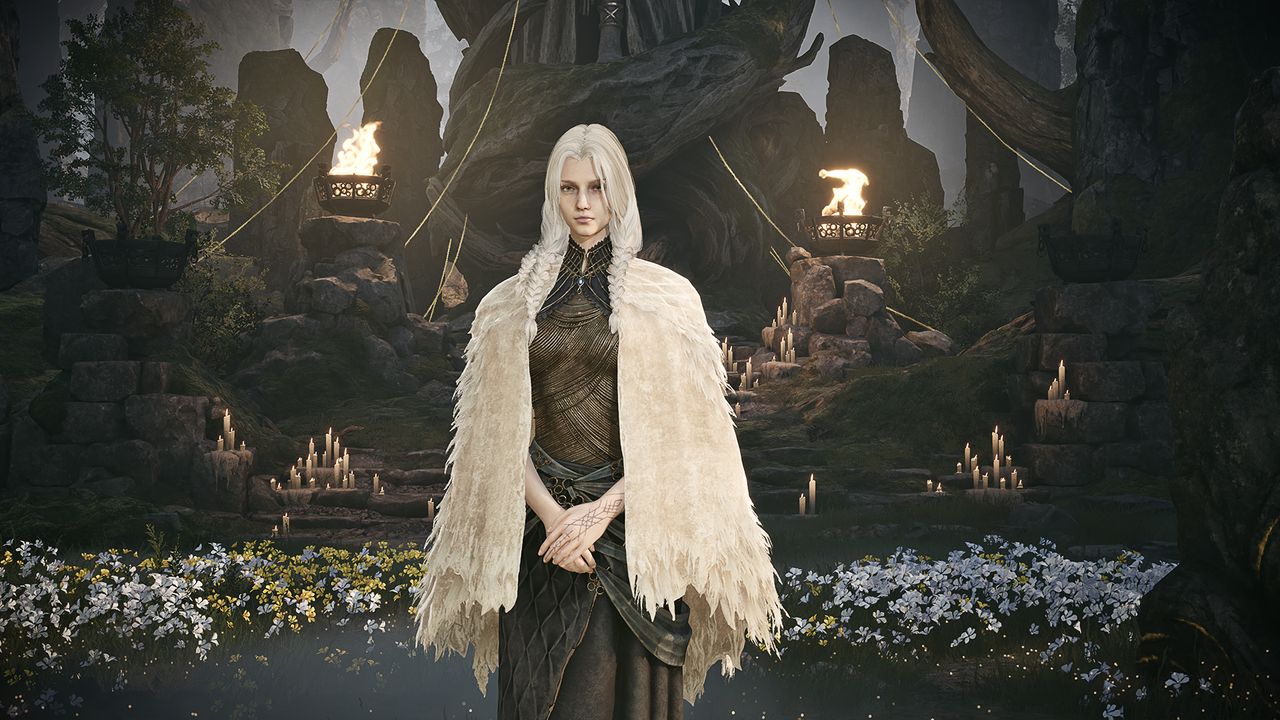
Dew is a surviving fragment of the Fate Goddess who resurrects the game's fallen Gyldhunters. Image: Bellring Games.
The world itself was designed around the extraction mechanic rather than existing separately from it. The gods are dead, their spilled blood created the Gyldenmist, and players repeatedly enter corrupted territory to recover Gyldenblood and relics. Bellring uses the mist as both mythology and match pressure. As the Gyldenmist closes in, staying longer can produce better rewards while simultaneously increasing the chance that you lose everything.
Zhang described that risk curve quite clearly before launch. Bellring wanted players to face two moments of tension around extraction: first obtaining the Soul of Return, then actually ringing the bell and escaping. The longer players remain in a match, the more valuable the potential reward becomes, but the environment and other players become increasingly dangerous.
That is one of the best pieces of design in Mistfall Hunter, and it is still the part I think other games will copy.
The bell is a better idea than another extraction helicopter
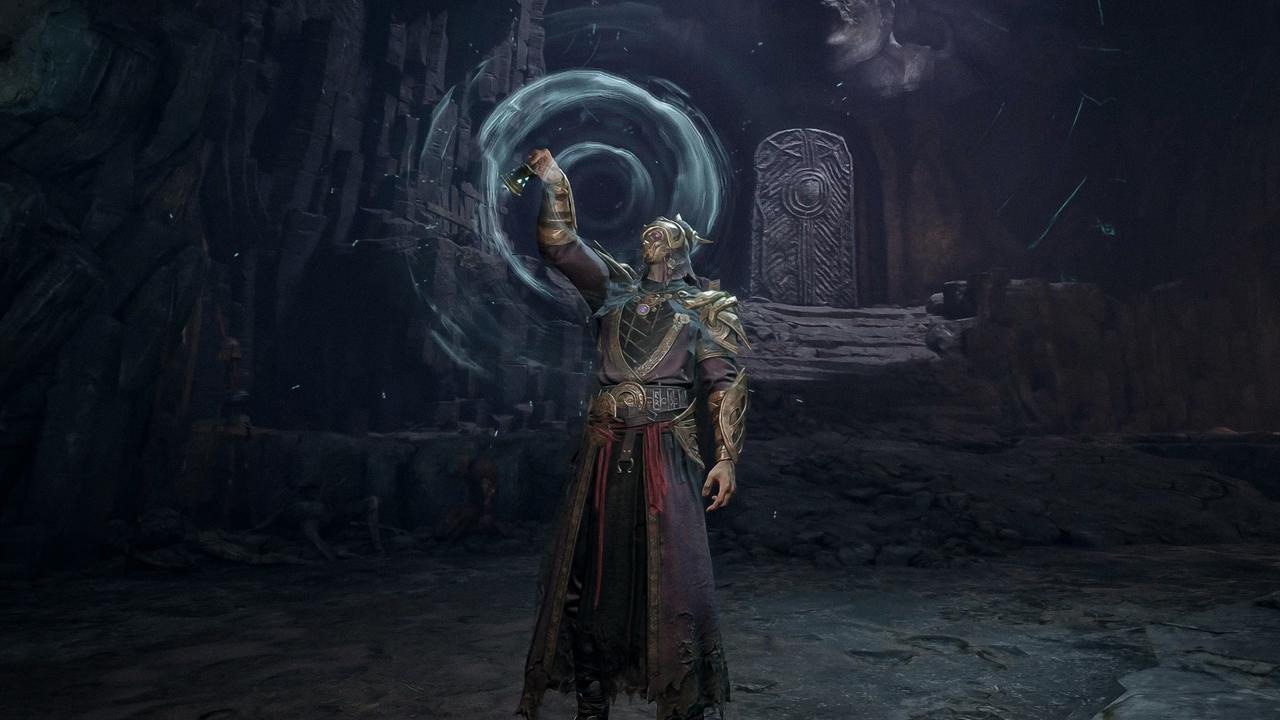
Getting enough loot is not the end of a run. You still need to leave with it. Image: Bellring Games.
Many extraction games make leaving mechanically simple once you reach the correct place. Mistfall Hunter deliberately makes extraction awkward. Players hunt down a Returner Woodling, kill it for a Soul of Return and use that resource to create a way home. The bell announces what you are doing to everybody nearby, which means escaping can become one of the most dangerous parts of the run.
That creates situations I find much more memorable than the ordinary PvE. You can spend twenty minutes behaving sensibly, kill a difficult enemy, find valuable equipment and decide it is finally time to leave. Then another player hears the extraction bell.
Now the entire run has a villain.
GamesRadar praised exactly this part of the final game. Extraction points can create temporary alliances, betrayals and fights because leaving is not always private or convenient. A player who seemed peaceful thirty seconds ago suddenly has a very good reason to kill you.
This is where Mistfall Hunter feels least like an imitation. The enemies, ruined castles, item descriptions and some animations can remind you heavily of Dark Souls and Elden Ring. The extraction tension feels more like Bellring's own game.
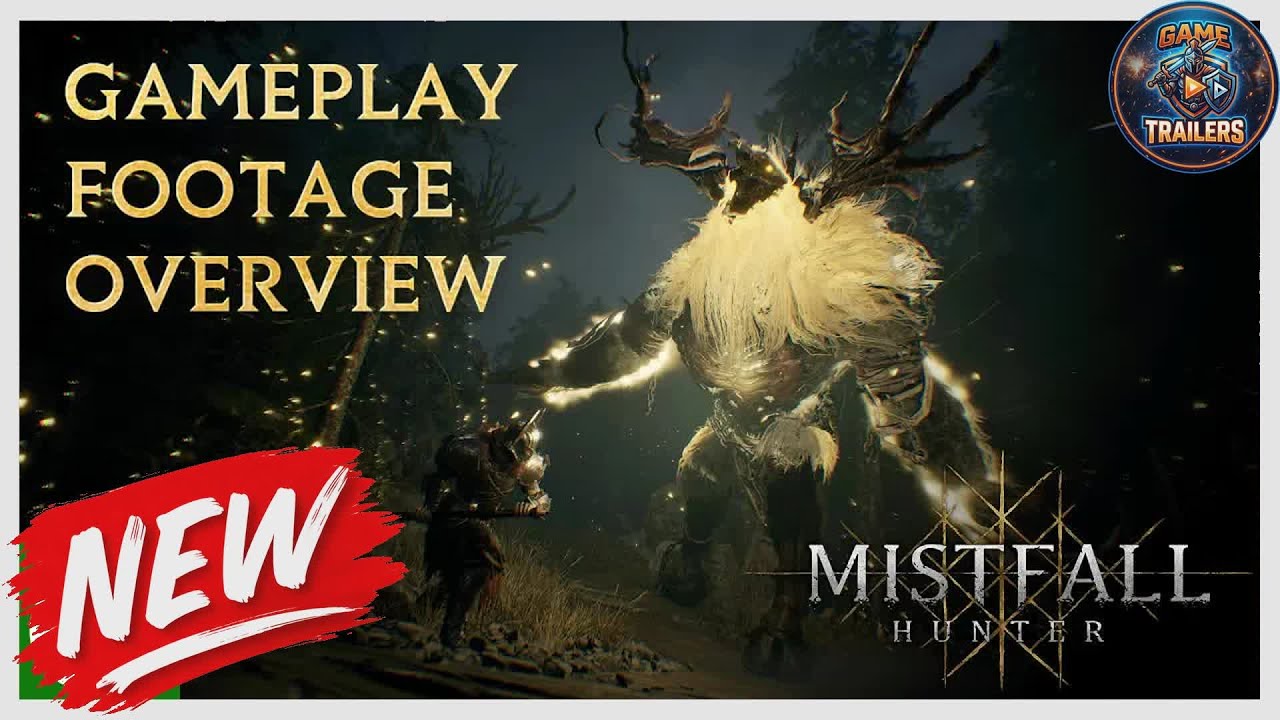
Watch the official gameplay deep dive
The longer gameplay footage is worth watching because the cinematic trailers make Mistfall Hunter look much more like a conventional Soulslike than it actually plays. The full loop is preparation, entry, PvE fighting, looting, player encounters, deciding how greedy to become, then trying to leave before the run turns against you.
The beta history explains why some parts feel polished and others still feel unfinished
Bellring tested Mistfall Hunter heavily before release. By Beta 3 in September 2025, the studio was already making large structural changes based on earlier testing. That build added the Camp as a proper preparation and social hub, the Blasphemer Seer class path, the General Harald boss, female variants and character customization, additional extraction options, and changes to stamina recovery designed to keep combat fast without completely removing tactical management.
The June 2026 Steam Next Fest demo then reached an all-time peak of 16,683 simultaneous players on SteamDB. GamesRadar described it during the event as Steam Next Fest's top demo and highlighted the same tension that would later define the full release: attractive loot, increasingly dangerous maps, other players and the pressure of extracting before the Gyldenmist closes.
The full game eventually peaked at 44,472, roughly 2.7 times that demo peak. That tells me the pre-release testing did what Bellring needed commercially. People did not just try the demo. Enough of them converted into launch players to produce a much bigger full-release audience.
The problem is that testing seems to have been more successful at validating the core loop than polishing everything around it.
The current Steam page has 6,128 English-language reviews, with only 61% positive. SteamDB's broader dataset tracks more than 14,000 total reviews, with about 58.2% positive and 41.8% negative, leaving the game firmly in Mixed territory.
That is not a small group of angry launch-day players distorting the score. Thousands of people have now had enough time with Mistfall Hunter to know what they like and what annoys them.
The reviews tell a surprisingly consistent story
The positive reviews tend to praise the same things: combat, class identity, meaningful loot and the tension created by PvPvE extraction. GamingTrend found the six classes distinct enough to create different approaches to fights and thought the extraction combat could easily justify the game's $25 price for the right audience. Other reviews have praised the ability to keep meaningful character progression even after a disastrous run, which helps soften the punishment of losing gear.
The criticism is equally consistent. GamesRadar liked the extraction tension but found the user interface exhausting, the hub overloaded with systems, the world too dependent on familiar Souls imagery and the limited map variety a concern for longevity. GamingTrend similarly warned about repetition and questioned how long the existing content could support the loop.
Then there are the technical complaints.
Players have reported latency, hit registration problems and desync, which are particularly damaging in a full-loot game. One Steam discussion described losing progress because players appeared to move unpredictably during network problems, and a Bellring representative responded by acknowledging desync reports and directing affected players toward support.
Not everybody is experiencing those problems. One recent review found the game ran at a largely stable 60fps and was surprisingly well optimized. That disagreement is worth noting because it suggests performance is not universally poor, but online consistency remains a serious issue for at least part of the audience.
My view is pretty simple: Mistfall Hunter can survive mediocre storytelling. It cannot survive players believing the networking decides who keeps the loot.
In a normal action RPG, some jank becomes part of the game's personality. In an extraction game, the same jank becomes a reason to uninstall.
Free aiming is probably Mistfall Hunter's most divisive combat decision
Bellring deliberately uses a precision free-aim system rather than traditional Souls-style lock-on. The official pitch is that manual aiming lets players target weak points and gives PvP more skill expression. Each of the six classes also has two weapon stances, active abilities, talent trees and gear affixes that can push builds toward aggression, mobility, control or defense.
I understand why Bellring did it.
Lock-on works wonderfully against AI because the game knows where the enemy is supposed to be. In PvP, hard lock-on can do too much of the tracking for the player. Mistfall Hunter asks melee players to control their own direction, distance and swing placement while another human is actively trying to dodge them.
The price is that the game sometimes looks clumsier than the genre it is borrowing from. GamesRadar's review specifically criticized the lack of lock-on because players can swing directly beside an enemy, while earlier previews found the combat less polished than FromSoftware's work.
I think the system is worth keeping.
The mistake would be reacting to complaints by simply adding traditional hard lock-on to everything. Bellring should improve hitboxes, animation feedback and camera behaviour until free aiming feels reliable. If the studio can make that work, it gives Mistfall Hunter's PvP a real mechanical identity rather than turning every duel into two players magnetically circling each other.
One million players sounds huge, but retention is the number Bellring should be watching
This is where the launch celebration meets reality.
Bellring announced one million players on August 5. Two weeks later, SteamDB shows roughly 15,000 concurrent players at the time of writing and a 21,933-player daily peak, compared with the 44,472 launch maximum. The game also currently ranks #99 in daily active users on SteamDB and #77 among Steam's live top sellers.
I do not think those numbers are disastrous.
Every multiplayer game loses launch tourists. Someone seeing 44,000 become 20,000 and immediately declaring a game dead is misunderstanding how launches work. A multiplayer title maintaining around half of its initial maximum as a daily peak several weeks later still has a real population.
The Mixed reviews worry me more than the raw player decline.
A 58% to 61% positive rating means Mistfall Hunter's audience is not rejecting the entire concept. If it were, player counts would probably have fallen much harder. Instead, thousands of people are continuing to play something they are simultaneously criticizing.
That is usually a sign that the core loop is stronger than the surrounding product.
Bellring should be encouraged by that, but not comfortable.
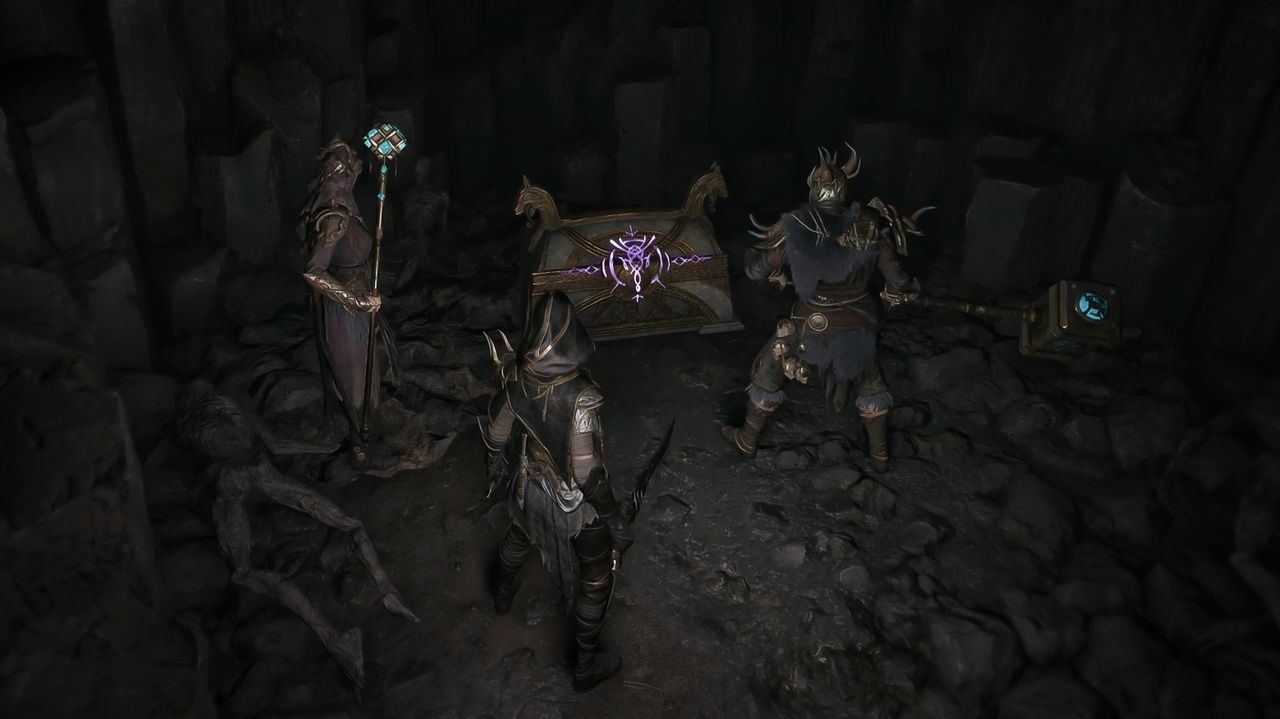
Loot matters because everything becomes vulnerable again the moment you take it back into the mist. Image: Bellring Games.
The game's current price also matters. At €24.99 in Europe and $24.99 in the US, Mistfall Hunter is not asking AAA money for an experimental multiplayer concept. That makes its rough edges easier to tolerate and helps explain why several reviews essentially arrive at the same conclusion: flawed, but easy to get $25 worth of entertainment from if the extraction loop clicks.
That price bought Bellring some patience. It did not buy unlimited patience.
Bellring is already rebuilding parts of the game after launch
The roadmap is where the next few months become interesting.
After reaching one million players, Bellring acknowledged what it called an overwhelming amount of feedback requesting solo access to Brandrgarde. The studio now plans to add solo versions of Normal and Cataclysm Brandrgarde missions during the middle of Season 1 in September. Bellring also openly acknowledged that doing so could split matchmaking populations and create new class-balance problems, which is exactly the kind of tradeoff a multiplayer developer should be talking about publicly.
Season 1 is planned in multiple phases. Bellring has outlined additional Einherjar difficulty, seasonal tasks, an Underworld speed challenge, the Golden Woodling monster and the Ancestor Tree random event. Season 2 is expected to bring further progression systems and equipment, including a new Javelin weapon for Blackarrow.
That roadmap tells me Bellring understands its biggest long-term problem: Mistfall Hunter cannot survive on Hallowgrove, Brandrgarde and PvP unpredictability forever.
Player conflict generates variety, but it cannot generate environments, bosses, weapons and progression systems that do not exist.
A strong live-service extraction game needs both.
This could become a great extraction RPG, but Bellring has less time than the million-player headline suggests
My opinion of Mistfall Hunter is higher after looking at how it was developed than it was after simply looking at the Steam score.
This was not a studio randomly combining two fashionable genres. Zhang and his team were deliberately trying to solve a design question they wanted to play themselves: what happens if the pressure of an extraction game is paired with action combat where players have to physically commit to every fight?
That experiment worked.
The bell extraction works. The shrinking Gyldenmist works. Losing equipment makes encounters matter. Classes create genuinely different approaches. PvP can turn a routine loot run into a story you remember. The fact that people are still playing while leaving thousands of critical reviews is almost proof that there is something valuable underneath the frustration.
But the data also says Bellring cannot spend six months congratulating itself.
The all-time Steam peak was 44,472. The current daily peak is around 22,000. Reviews are Mixed. Steam's live revenue position has fallen to #77. Player complaints are focused on issues that directly threaten extraction games: netcode, balance, solo restrictions, repetition and content depth.
That is the real insight behind Mistfall Hunter's first three weeks.
The game has already proved that people want the idea. Bellring has not yet proved that it can keep them.
There is a big difference.
A million people entering the mist makes a great launch graphic. What matters now is how many of them still want to go back in when September, October and Season 2 arrive.
If Bellring fixes the technical layer, expands the maps and keeps designing systems that create uncomfortable player decisions, Mistfall Hunter could end up becoming one of those games whose Mixed launch reviews look strange a year later.
If it spends too much time adding currencies, cosmetics and progression menus while the same complaints continue underneath, the 44,472-player launch peak may become the number everybody remembers.
Right now, I genuinely think either outcome is possible.
That makes Mistfall Hunter much more interesting than a game everyone had already decided was good.
1 Comment
to comment
No comments yet. Be the first to share your thoughts!